
PROJECT 06 / AUTOMOTIVE / ENTERPRISE UX / AI INTERACTION DESIGN
Predictive Maintenance+ Remaining Useful Life (RUL)
Turning AI predictions into meaningful maintenance decisions.
Predictive maintenance systems can estimate the remaining useful life of vehicle components. But presenting a prediction is not the same as helping someone understand what it means. This project explores how interface design can translate AI-based maintenance predictions into understandable information and actionable guidance.
01 / UNDERSTANDING VEHICLE HEALTH
From prediction
to understanding.
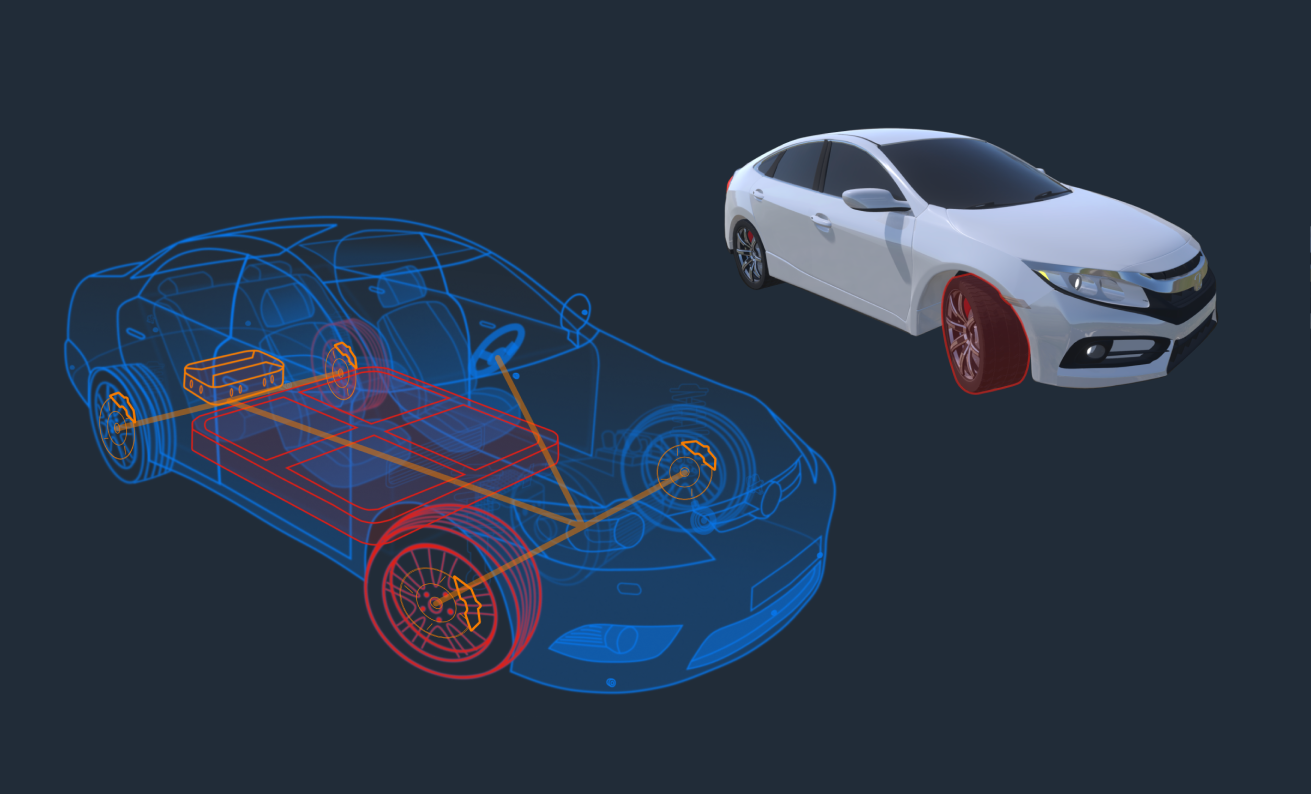
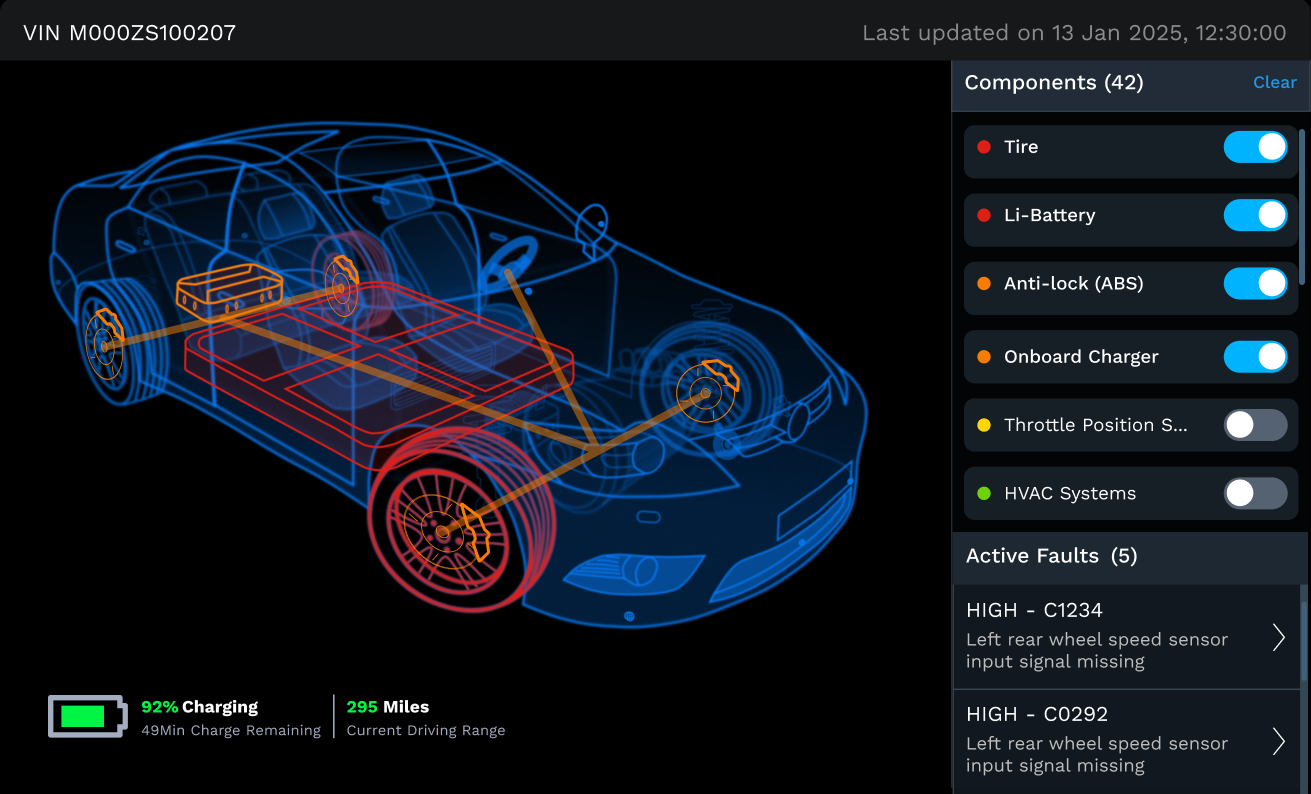
Exploring human-centred interfaces for predictive maintenance, with a focus on how vehicle health information, Remaining Useful Life (RUL) estimates and maintenance recommendations are communicated to users.
02 / THE DESIGN CHALLENGE
A number alone
is not enough.
An RUL prediction can indicate how much useful life may remain in a component, but users still need to understand its significance.
The design challenge was to make predictions easier to interpret and connect them with appropriate maintenance decisions.
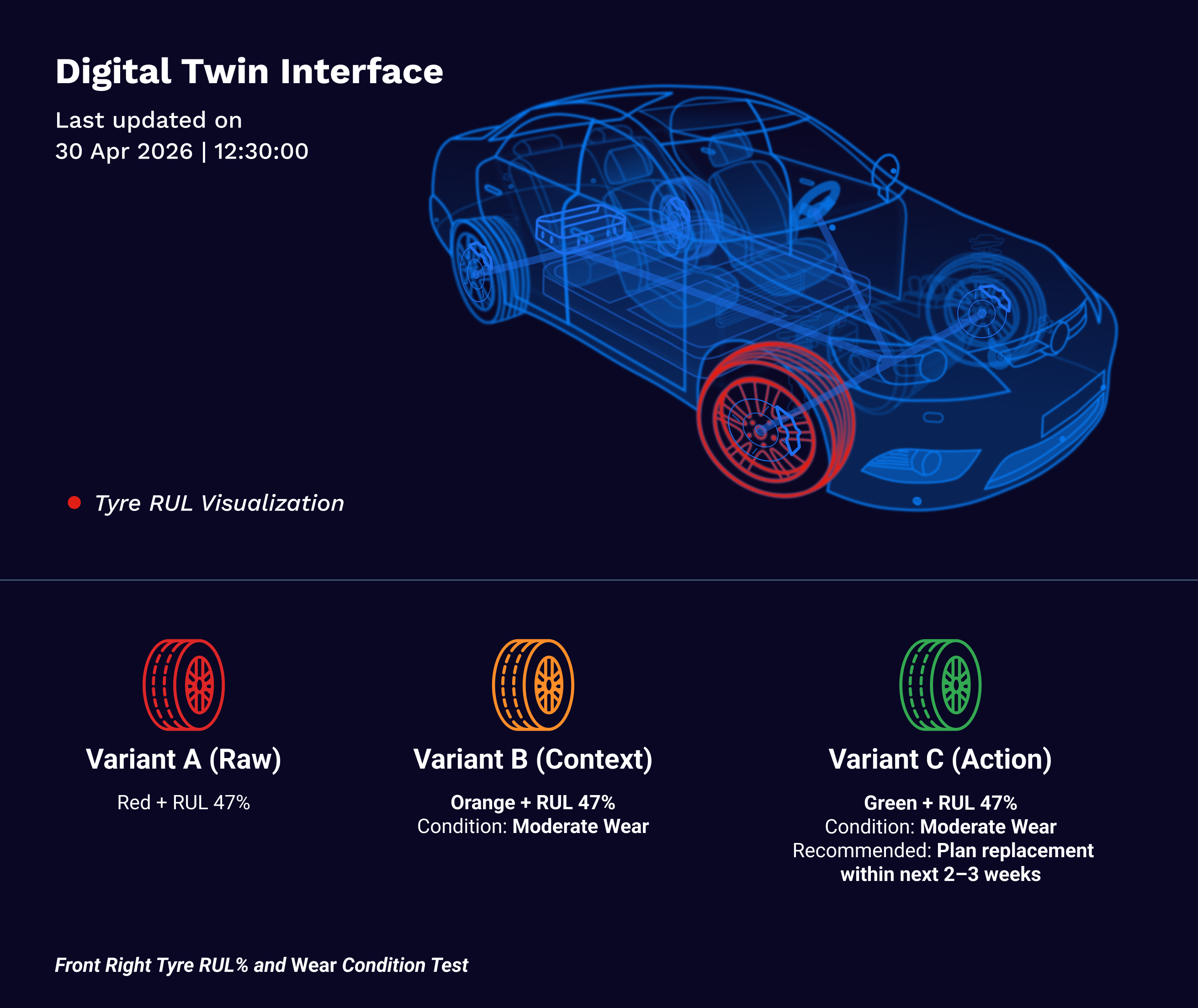
Three interface approaches explored
- 01Raw Prediction
Displaying numerical RUL information.
- 02Contextual Explanation
Adding meaning and interpretation.
- 03Action-Oriented Guidance
Connecting predictions with recommended next steps.
03 / RESEARCH AND DESIGN INSIGHTS
Designing for
better decisions.
An exploratory study involving nine participants used tyre health as a representative predictive maintenance scenario. Participants evaluated three interface approaches through scenario-based maintenance tasks.
- Raw numerical predictions created ambiguity.
- Contextual explanations improved interpretation.
- Action-oriented guidance supported more consistent maintenance decisions.
These observations are exploratory and should not be treated as statistically generalizable.
04 / CLOSING
Intelligence needs an
understandable interface.
Predictive maintenance is not only about estimating when a component may require attention. It is also about communicating that information clearly enough to support informed decisions.
The project demonstrates how human-centred interaction design can help bridge the gap between AI-generated predictions and practical maintenance guidance.
This work explores interface concepts and research; it does not represent a deployed production system.
RESEARCH PRESENTATIONS / 2026
Research Presented at International Conferences
The research was presented at two international conferences in 2026, exploring visual digital twin interfaces and human-centred communication of predictive maintenance information.
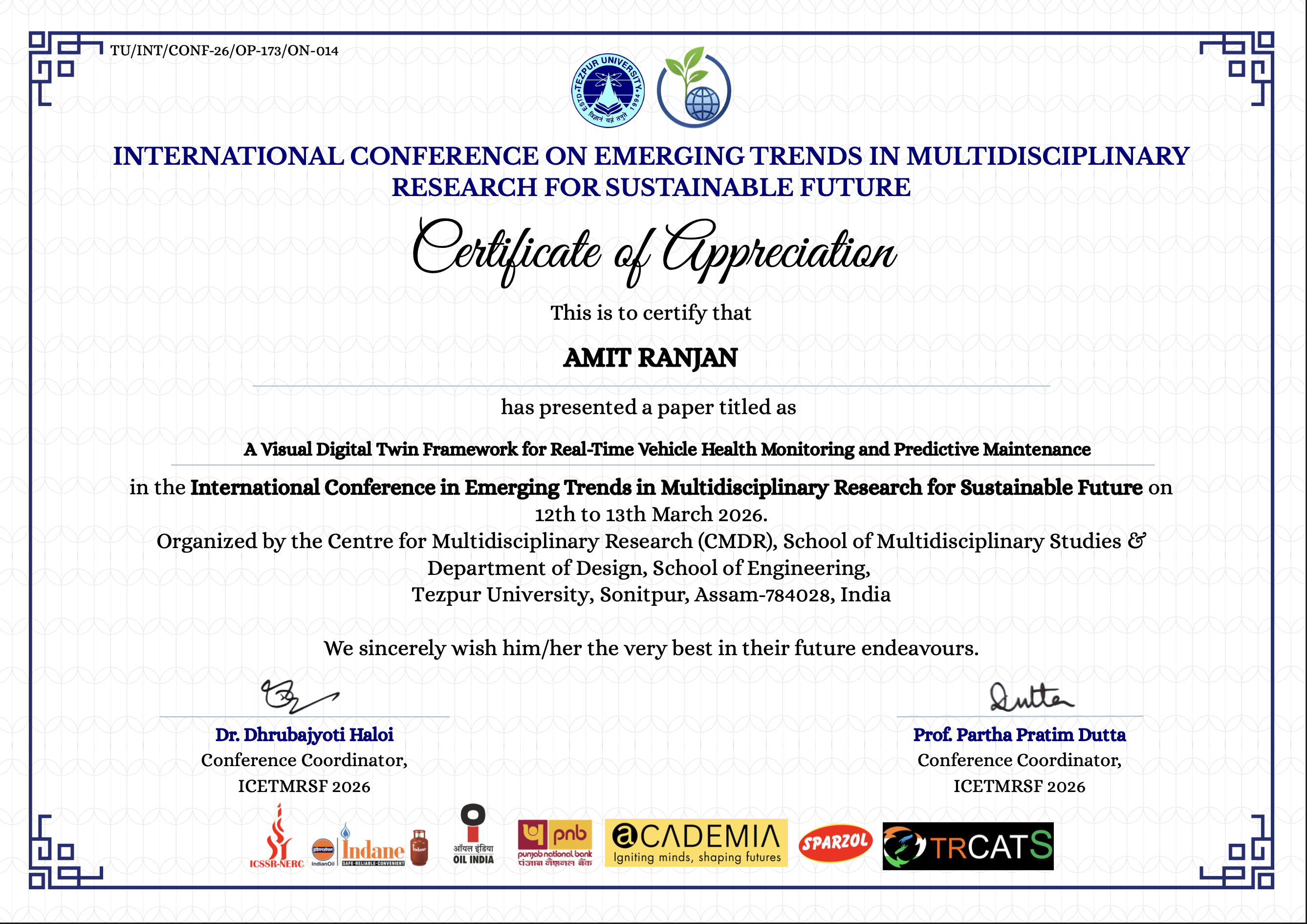
Digital Twin Framework - Tezpur University, March 2026
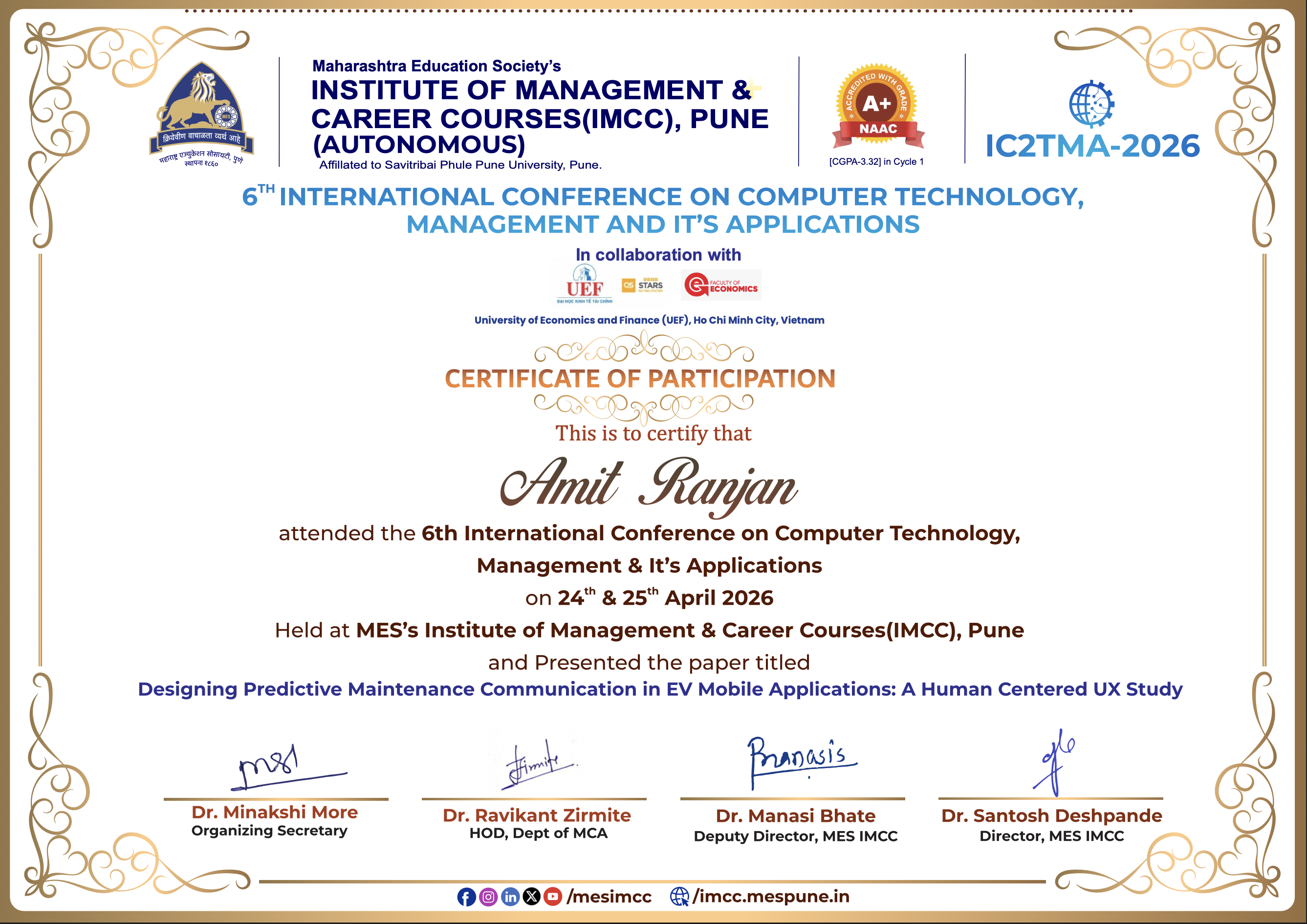
Predictive Maintenance Communication - Pune, April 2026