
PROJECT 07 / E-COMMERCE / UX DESIGN
Making electronicsshopping simpler.
Zopper - A Mobile-First Commerce Experience
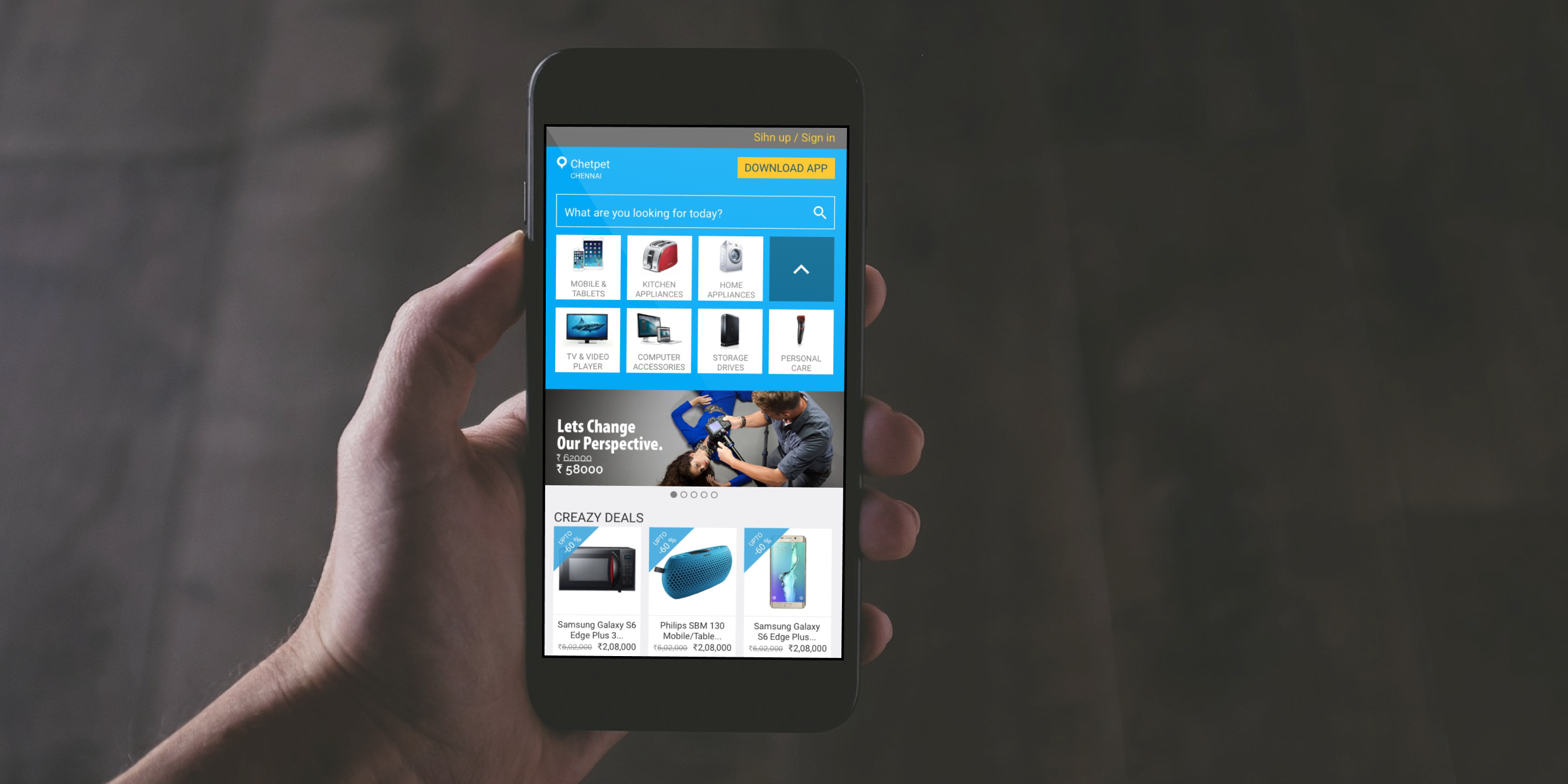
Designing a connected shopping experience for electronics and appliances, bringing together product discovery, purchasing, order management and post-purchase support.
01 / THE CHALLENGE
When shopping becomes complicated.
Electronics shopping involves more than selecting a product. Customers need to explore options, understand specifications, complete purchases and access order information after buying.
The existing Zopper Android experience was evaluated to identify usability problems across navigation, structure, visual design, layout, labelling, content and error handling. The challenge was to simplify these interactions and create a more understandable shopping journey.
The Android evaluation is distinct from the broader commerce experience explored in this case study.
02 / UNDERSTANDING THE EXPERIENCE
Finding the friction before designing the solution.
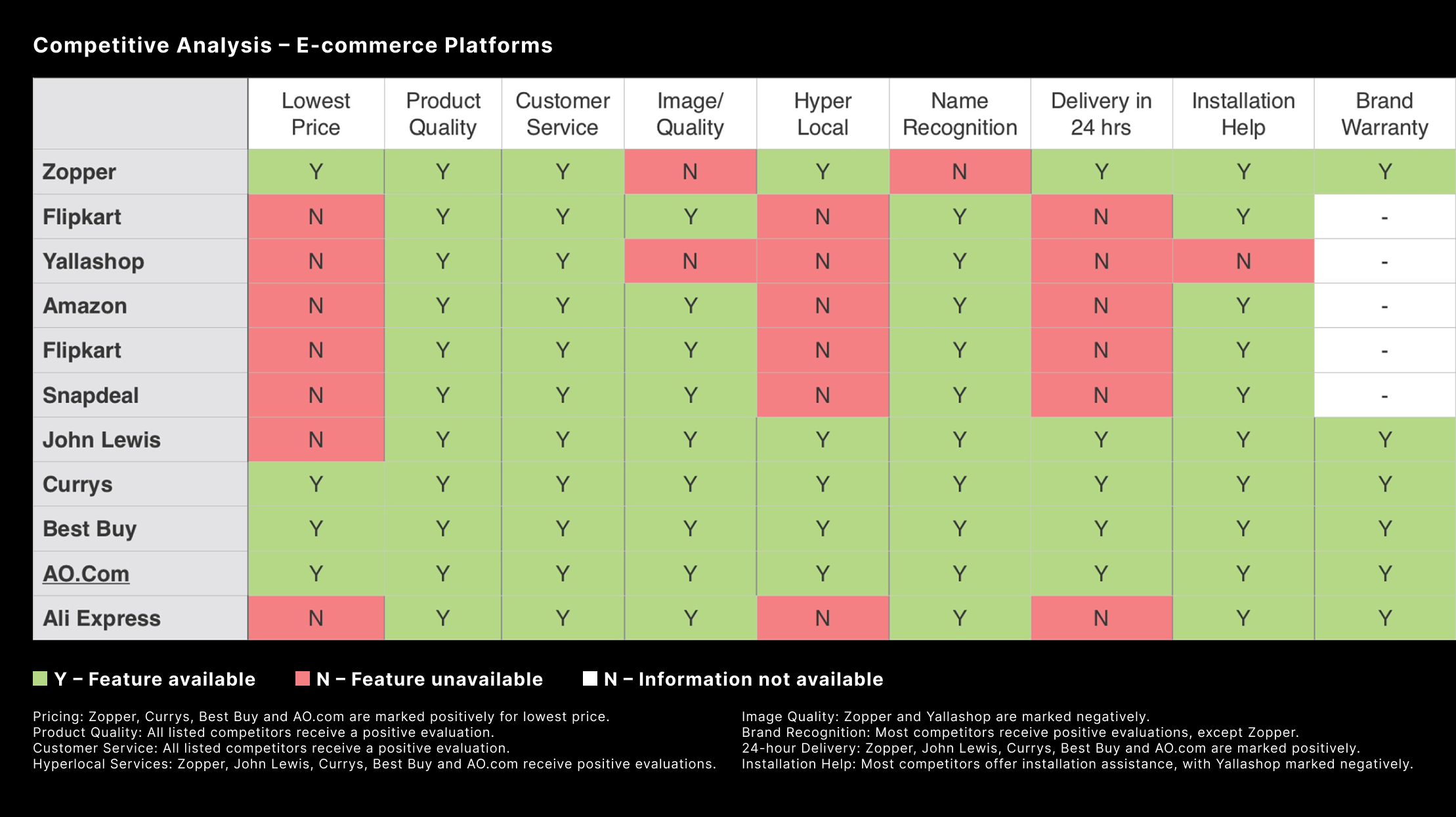
The design process began with competitive analysis and a heuristic evaluation of the existing experience. Competitive analysis helped identify how Zopper compared with other commerce products.
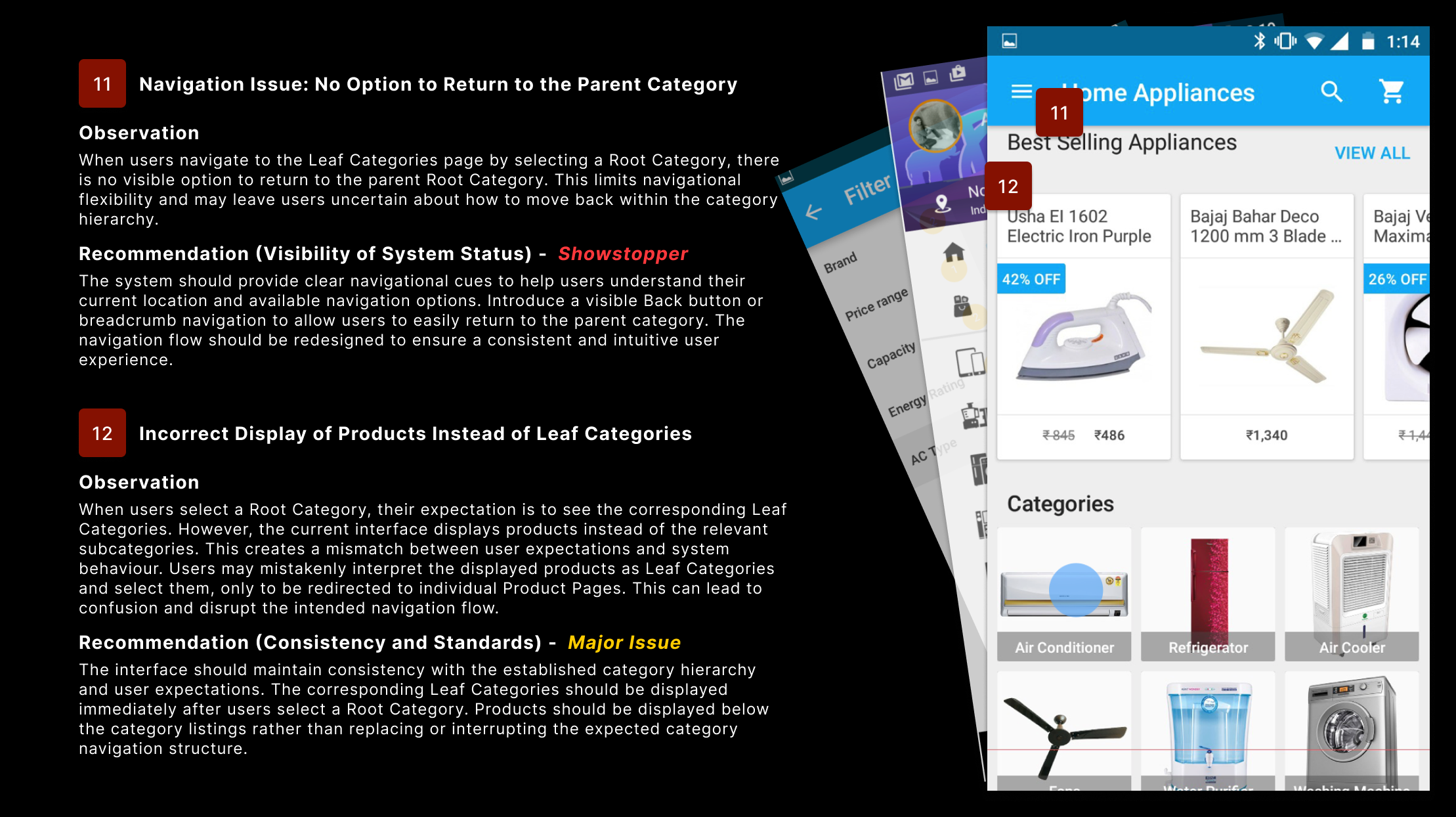
The heuristic evaluation revealed usability issues, with navigation and structure emerging as particularly important areas for improvement.
The evaluation highlighted the need for clearer navigation, more intuitive information structures and reduced ambiguity between competing actions.
- Showstoppers
- 4
- Major issues
- 28
- Minor issues
- 16
03 / INFORMATION ARCHITECTURE
Making complex journeys easier to follow.
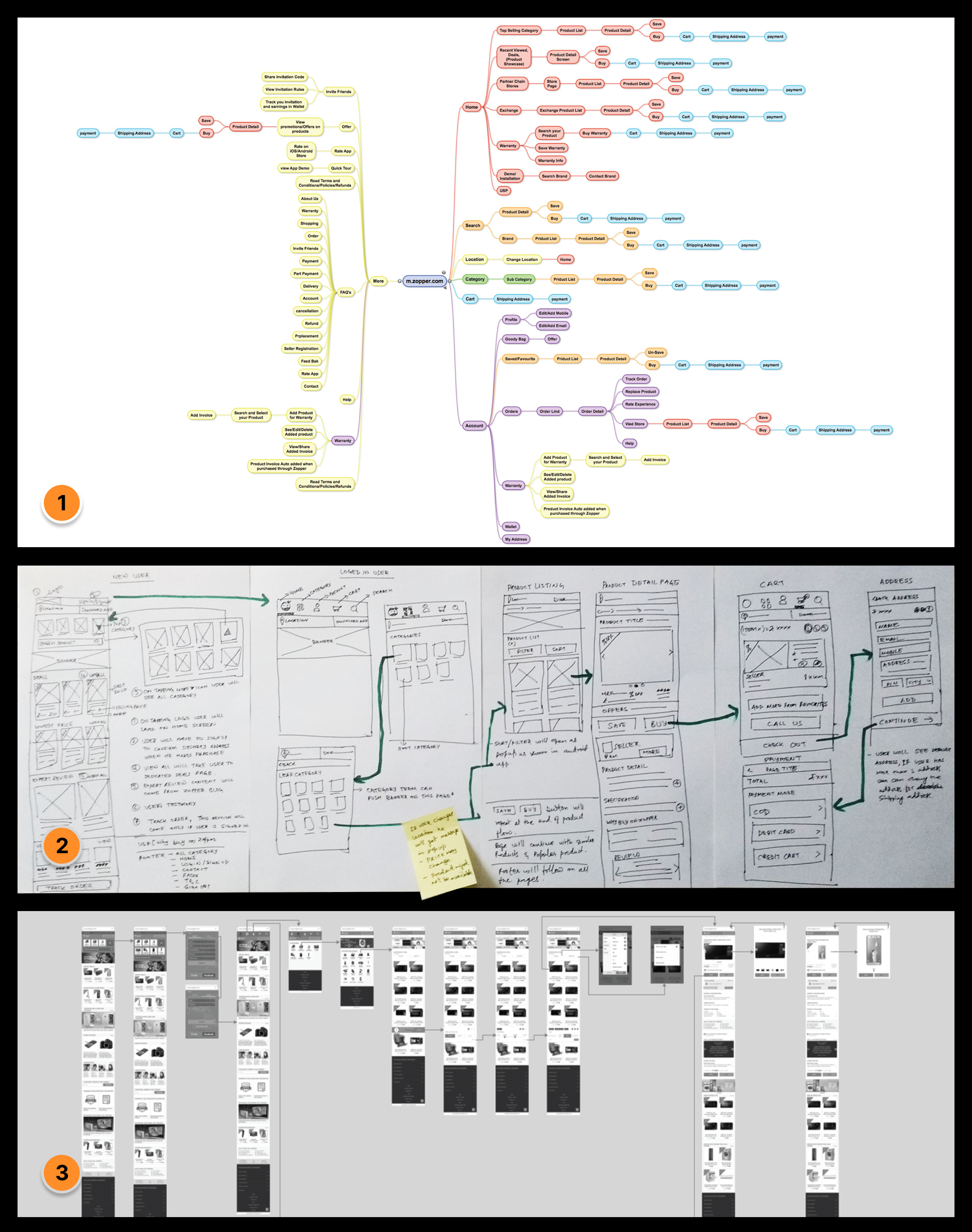
Information architecture, navigation flows and wireframes helped organise the shopping experience before detailed visual design.
The work explored how customers move between browsing, product information, account access, checkout and order-related tasks, with clearer relationships between screens, actions and information.
04 / PRODUCT DISCOVERY
Help customers find the right product.
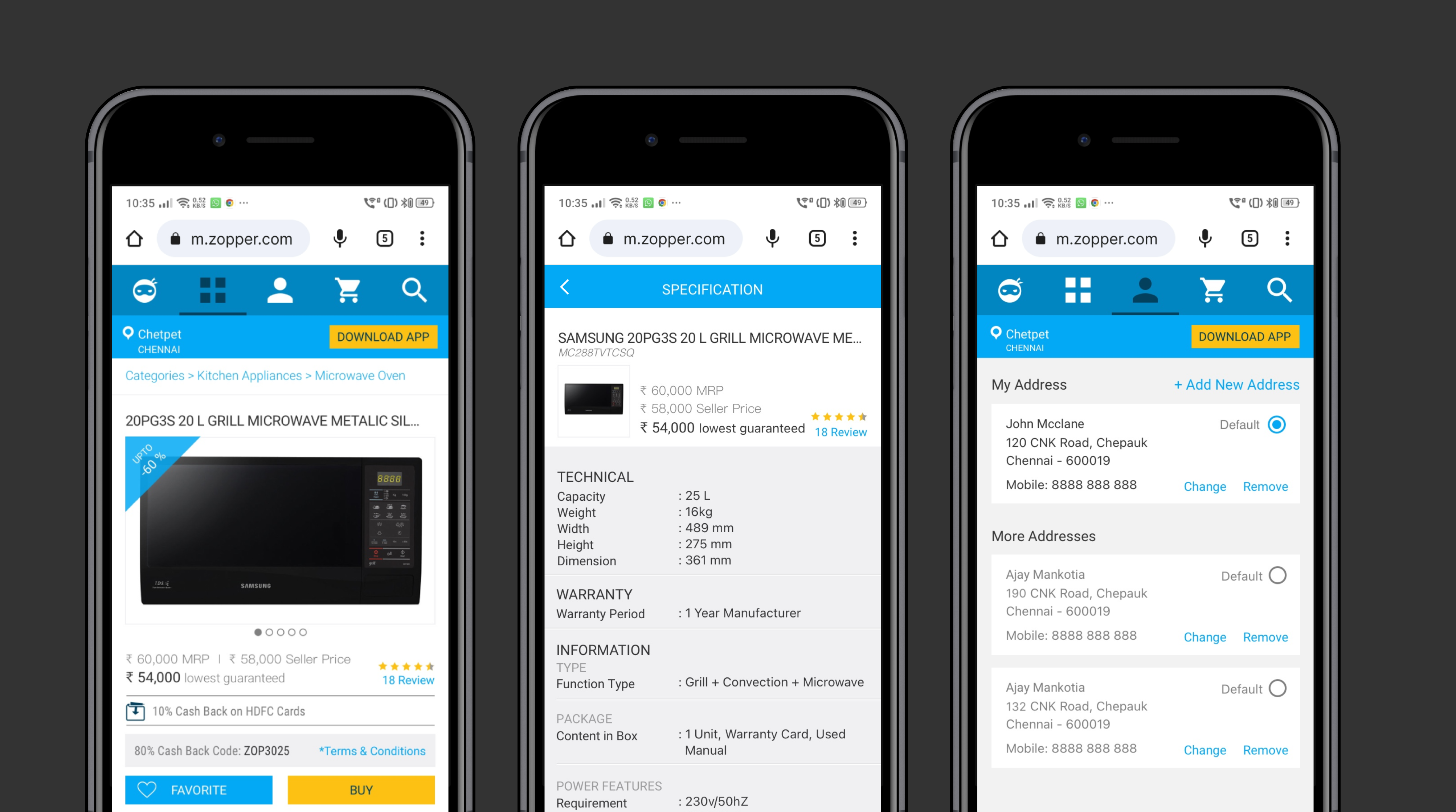
The shopping interface explored home experiences for signed-in and non-signed-in users, product details, specifications, descriptions, sorting and filtering.
These elements support product exploration and help customers understand their options before making a purchase.
05 / CHECKOUT
From product selection to payment.
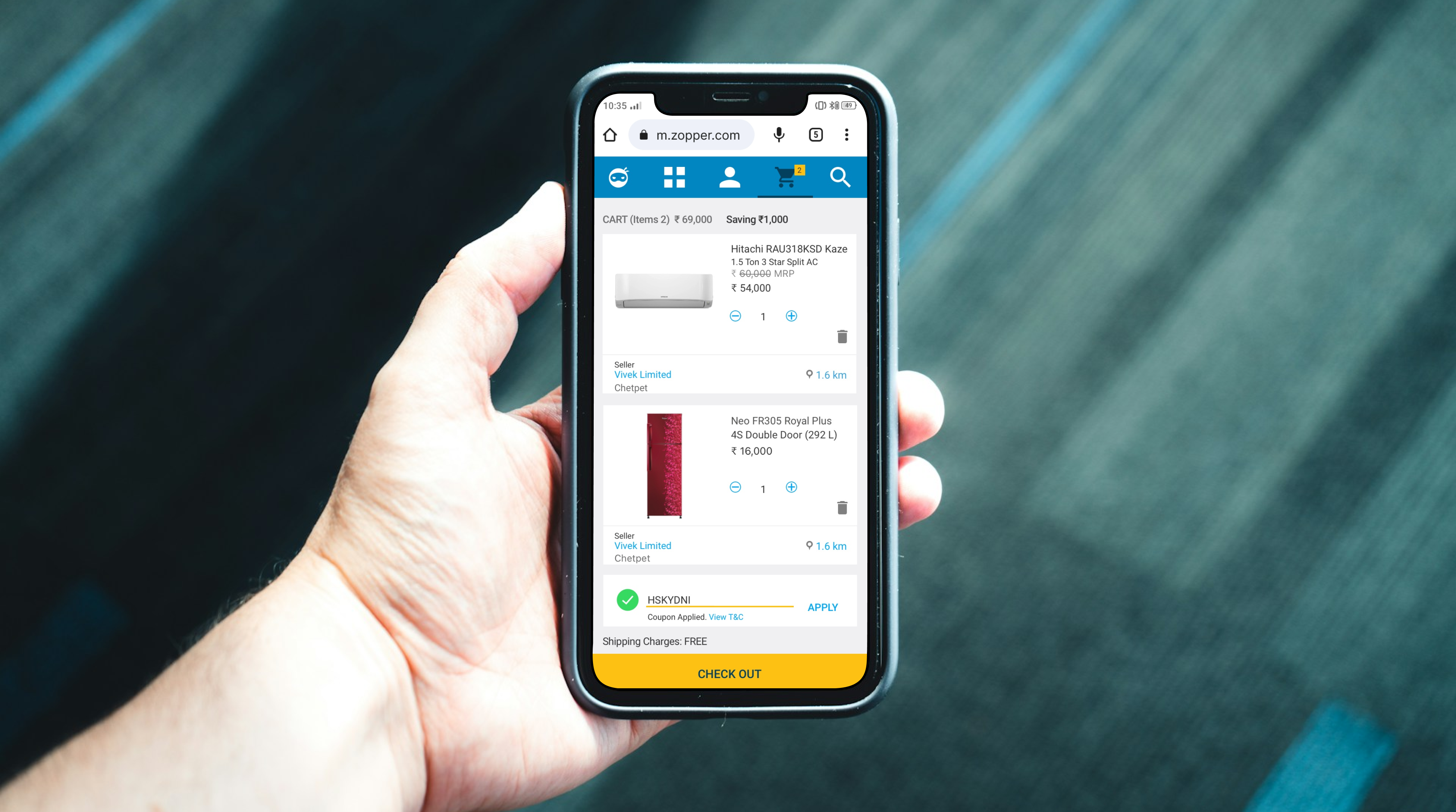
The purchase journey covered product details, order placement, coupon entry, customer authentication, delivery address and payment selection. The documented flow also included EMI payment options.
The design explored how customers could progress through checkout without requiring account creation before beginning their shopping journey.
06 / POST-PURCHASE SUPPORT
The experience doesn’t end at checkout.
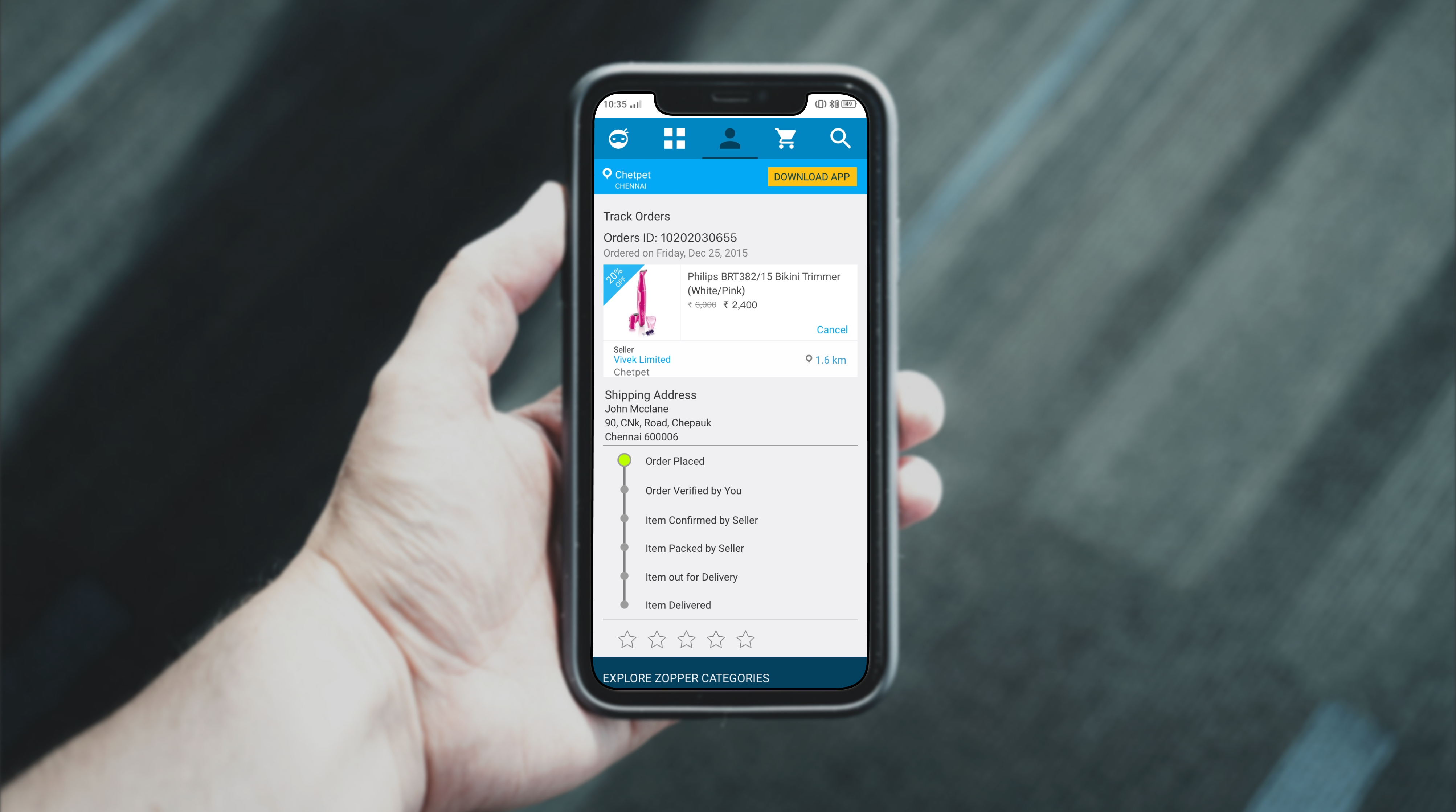
Order history, tracking information and warranty details formed part of the wider customer experience. The design explored ways to make purchased products recognisable through imagery, provide access to warranty information and support customers reviewing previous orders.
Error screens were also considered as part of the experience, helping users recover and navigate back to relevant content.
Mobile-first commerce
One experience.
Different screens.
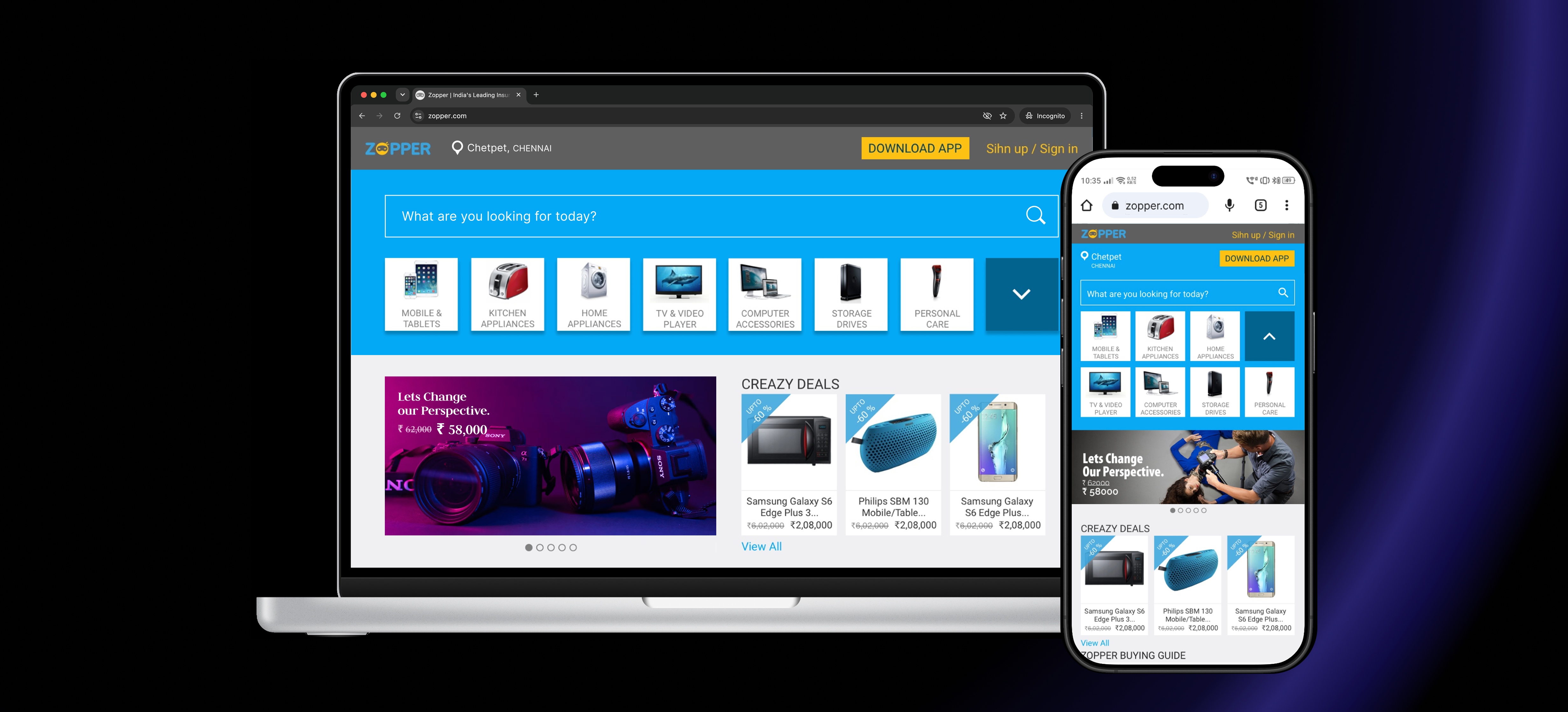
The mobile-first approach provides the foundation for a responsive shopping experience. Interface and content hierarchy can adapt to different screen sizes while maintaining consistency across the shopping journey.
A connected commerce journey
Designing the complete
shopping experience.
The Zopper work brought together usability evaluation, competitive research, information architecture, interaction design and interface exploration across key commerce journeys.
From finding products to completing purchases and managing orders, the project demonstrates a structured approach to designing interconnected digital experiences.